
December 2, 1877
Cahir Healy, born in Mountcharles, Co. Donegal
Ireland
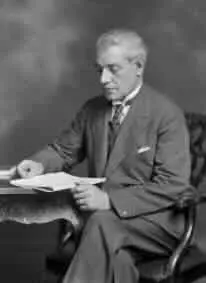
Cahir Healy, (2 December 1877 – 8 February 1970) an Irish politician, was born in Mountcharles, County Donegal, Ireland, on August 30, 1917.
He was a prominent Irish nationalist, politician, and barrister. Cahir Healy played a significant role in Irish politics, particularly in advocating for Irish nationalism and civil rights.
Political Involvement
- Cahir Healy was a member of the Irish Labour Party and later joined the Nationalist Party.
- He became active in politics during a time of significant social and political change in Ireland.
- 1905 - He joined Sinn Féin on its foundation.
- He was an Anti Partisionist and campaigned against the inclusion of County Fermanagh and County Tyrone into Northern Ireland.
- 1922 - Elected in the UK general election to represent Fermanagh and Tyrone as a Nationalist Party MP, with the support of Sinn Féin
- 1931 - By-election he was again elected for Fermanagh and Tyrone to the British Parliament but stood down again in 1935.
In a 24 April 1934 speech on the floor of the Northern Ireland Parliament Healy made clear his feelings on the ruling Unionist government and its treatment of Catholics:
“We know there is today no place for a Catholic in any public office. They are banned more effectively by the bigotry, secret and open, of the Northern Ministers, than they were in the days before the passing of the Catholic Emancipation. But for all that, we are not despairing…What Cromwell attempted in vain you will also attempt in vain. God and right are with us and will prevail over all your machinations. This is not the last generation. Neither will your threats cause us to change our ideals, of a united and free Ireland”.
Civil Rights Activism
- Healy was a strong advocate for civil rights, particularly during the Civil Rights Movement in Northern Ireland during the late 1960s.
- He was involved in efforts to address discrimination and inequality, advocating for the rights of the Catholic nationalist community.
1922 Arrest
Following the 22 May 1922 assassination of William J. Twaddell (a Unionist Member of Parliament in Belfast) Healy was interned for eighteen months along with 300 others under brutal conditions on the prison ship HMS Argenta. Healy is quoted on the reasons for his arrest and internment:
“All my life, I have been a man of peace. It is not, therefore, because they feared that I would disturb the peace of Northern Ireland that they dragged me away from my wife and family, but for political reasons. I have been engaged in preparing the case for the inclusion of these areas (Fermanagh and Tyrone) in the Free State. To get me out of the way, local politicians urged my arrest.”
Legal Career
- Cahir Healy was a barrister by profession, contributing to the legal field while also being active in politics.
- His legal background informed his approach to civil rights issues and social justice.
Member of Parliament
- He served as a Member of Parliament (MP) for the Northern Ireland Parliament (Stormont) representing the Nationalist Party.
Later Life
- Cahir Healy continued to be involved in politics and civil rights activism throughout his life.
- Healy became an insurance official in Enniskillen but continued to write, his output including journalism, poetry and short stories.
- He was a correspondent for a number of Irish and American papers.
- Over the years Healy wrote hundreds of historical articles, scripts and plays for the Irish, British and United States media.
- He passed away on August 22, 1970, at the age of 52.
Cahir Healy is remembered for his contributions to Irish politics and civil rights, particularly during a period marked by tensions and social changes in Northern Ireland.